 Tel. colombia
  us phone



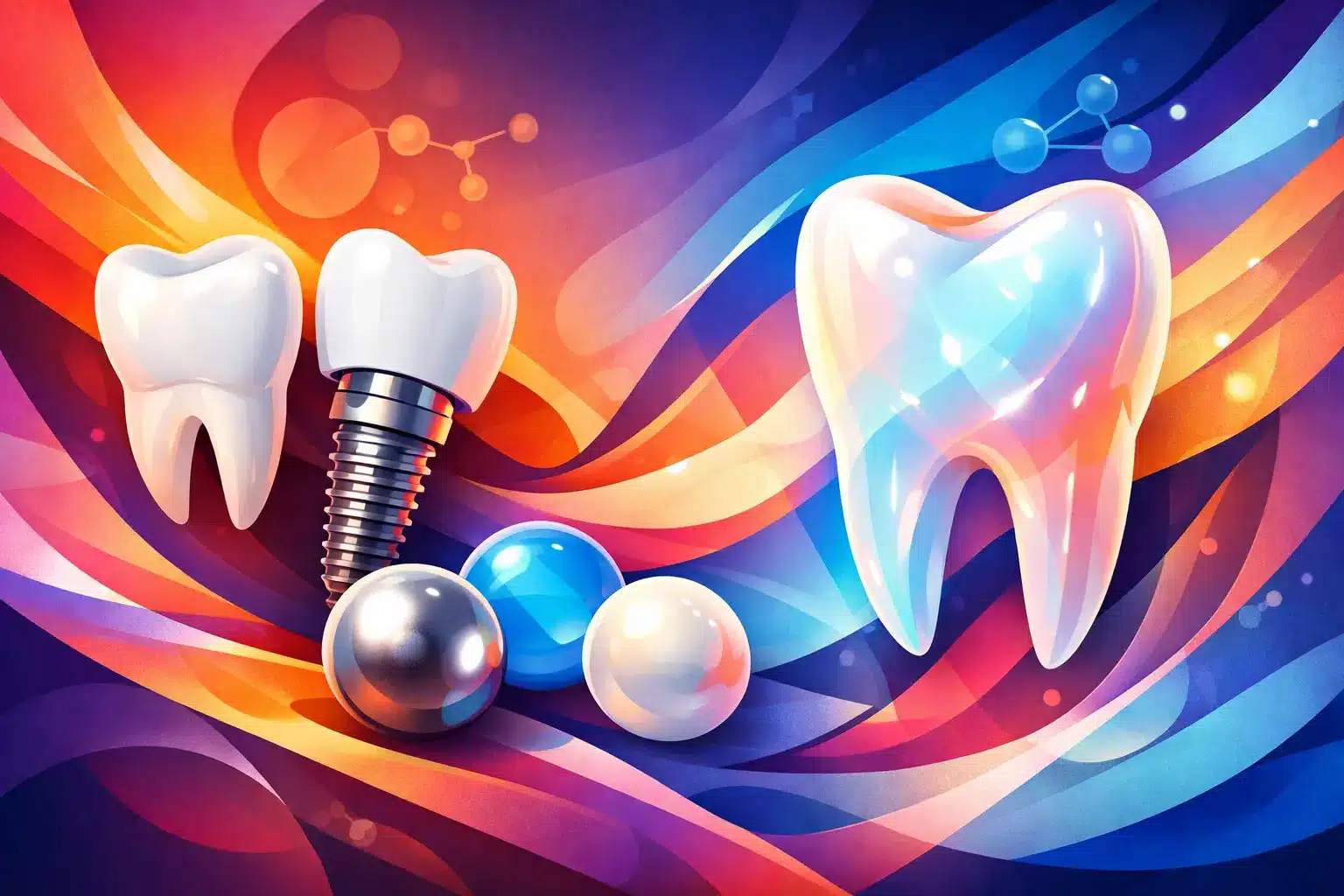
A dental implant may be hidden beneath a beautiful new tooth, but its material choices influence everything you feel and see afterward: stability, gum health, bite comfort, and the natural character of your smile. Knowing how to select implant materials begins with one essential principle: the right choice is never based on a single material being “best” for everyone. It is based on your anatomy, health history, esthetic goals, and the precision of the treatment plan.
For patients traveling to Cartagena for premium restorative dentistry, this conversation deserves the same care as choosing the shape and shade of the final crown. A sophisticated implant result is not simply a replacement tooth. It is a carefully engineered restoration designed to look effortless, function confidently, and complement your facial appearance for years.
How to Select Implant Materials With Confidence
An implant restoration has more than one component. The implant fixture is the small post placed in the jawbone. The abutment connects that implant to the visible tooth. The final crown, bridge, or full-arch restoration is the portion that restores your smile. Each component may involve a different material, and each choice has clinical and esthetic consequences.
Your implant dentist should lead the selection after a complete examination that includes digital imaging, a bite analysis, gum evaluation, and a review of your medical and dental history. If bone volume is limited, if you clench or grind your teeth, or if the implant will be visible when you smile, the plan may change substantially.
The goal is not to choose the most expensive material by default. It is to select the material combination that offers the right balance of biological compatibility, strength, appearance, and long-term maintenance for your specific case.
Titanium: The Proven Standard for Implant Fixtures
Titanium remains the most widely used material for dental implant fixtures, and for good reason. It has an exceptional record of osseointegration, the biological process in which the bone bonds to the implant surface. This creates the secure foundation needed to support a crown, bridge, or full-mouth restoration.
Titanium is strong, lightweight, and highly resistant to corrosion in the oral environment. It is particularly versatile for patients who need a single posterior tooth replaced, have strong bite forces, or require complex rehabilitation involving several implants. Its long clinical history also gives experienced implant dentists a broad foundation of evidence when planning demanding cases.
Some patients ask whether titanium can cause sensitivity or allergic reactions. True titanium allergy is considered uncommon, but every medical concern should be discussed openly before treatment. A careful medical history matters, particularly for patients with prior reactions to metals or complex systemic conditions.
For most candidates, titanium provides a highly reliable foundation. The fact that it is metallic does not mean it affects the appearance of the final smile. The implant itself sits below the gumline and is covered by the abutment and restoration.
When titanium may be the preferred choice
Titanium is often favored when maximum strength and predictability are the priority, especially in molar areas where chewing pressure is greatest. It can also be an excellent choice for patients needing bone grafting, sinus elevation, or other advanced surgical planning. The best outcome still depends on precise placement, stable gum tissues, excellent hygiene, and a restoration designed to distribute biting forces properly.
Zirconia Implants: A Metal-Free Alternative
Zirconia implants are made from a high-performance ceramic known for its white color and excellent esthetic potential. For a select group of patients, particularly those who strongly prefer a metal-free solution or have very thin gum tissue in the front of the mouth, zirconia may be worth considering.
Its tooth-colored appearance can be an advantage in highly visible areas. If gum recession occurs years later, a white ceramic implant may be less likely to create a gray shadow than a metallic fixture. That said, modern titanium implant systems can also achieve remarkably natural esthetics when they are placed correctly and paired with the right abutment and crown.
Zirconia has important limitations to consider. Not every anatomy, bite pattern, or restorative situation is ideal for this material. Zirconia implant systems may offer fewer restorative options than titanium in complex full-arch or angled implant cases. They also require careful case selection because material design, implant position, and bite forces become especially consequential.
A premium treatment plan does not present zirconia as automatically superior because it is newer or metal-free. It evaluates whether its benefits genuinely serve your smile, your health needs, and the type of restoration you require.
The Abutment Matters More Than Many Patients Realize
The abutment is the connection between the implant fixture and the visible crown. Though small, it plays a major role in the emergence profile of the tooth, which is how the restoration appears to rise naturally from the gumline.
Titanium abutments are exceptionally durable and commonly used in posterior teeth or areas where strength is the central concern. Zirconia abutments can be particularly valuable in the smile zone because their light color supports a more translucent, lifelike result beneath ceramic crowns.
In some cases, a customized abutment provides a more refined outcome than a prefabricated option. Customization allows the dentist to shape the support for your gum tissue and crown more precisely. This is especially relevant for replacing a front tooth, where small differences in contour, symmetry, and light reflection can affect the final esthetic impression.
The best abutment material also depends on the crown selected. A translucent all-ceramic crown may benefit from a zirconia abutment, while a high-strength posterior crown can pair beautifully with titanium. This is why implant materials should be planned as a complete system rather than as isolated purchases.
Choosing the Material for the Visible Crown
The crown is the part people see, and it should be selected with both beauty and function in mind. Today’s leading ceramic options can closely replicate enamel, but they do not all perform the same way.
Monolithic zirconia is a highly durable ceramic often recommended for molars and for patients with powerful bites or nighttime grinding. Newer zirconia formulations offer improved translucency, allowing strength without the excessively opaque look associated with older materials. Still, the most translucent zirconia may not be ideal in every high-pressure area, so the dentist must balance esthetics and resistance.
Lithium disilicate is known for its exceptional translucency and natural light behavior. It can be a beautiful choice for a single anterior crown when the implant position, gum architecture, and bite conditions are favorable. It may not be the first choice for every back tooth or for patients with severe bruxism, where greater strength may be needed.
Layered ceramic restorations can deliver exquisite color depth and surface detail, particularly in the front of the mouth. However, their delicate esthetic layers may be more prone to chipping than a monolithic material in patients with intense bite forces. This is a classic example of why the most beautiful material in one situation may not be the most durable choice in another.
Your Bite, Gums, and Bone Shape the Decision
Material selection is only one part of implant success. An outstanding crown cannot compensate for an implant placed in a poor position, unstable gum tissue, untreated periodontal disease, or excessive bite pressure.
Patients with bruxism may need a stronger crown design and a custom night guard to protect both natural teeth and implants. Patients with thin gum tissue may benefit from additional soft-tissue planning to create a fuller, more stable frame around the new tooth. When bone is insufficient, grafting or regenerative procedures may be recommended before or during implant placement.
For a front-tooth implant, esthetics often demand meticulous planning of the gumline, shade, translucency, and facial symmetry. For a molar implant, chewing strength and long-term wear may be the dominant priorities. Full-mouth implant rehabilitation introduces another level of complexity, requiring careful selection of a framework and prosthetic material that can support the entire bite comfortably.
Questions Worth Asking at Your Consultation
A distinguished implant consultation should make the material discussion understandable, not overwhelming. Ask which material is recommended for the implant, abutment, and crown, and why that combination suits your case. Ask how your bite, gum thickness, bone quality, and desired smile appearance affect the recommendation.
It is also wise to ask about maintenance. Implant restorations require professional monitoring, consistent home care, and occasional adjustments just as natural teeth do. A high-quality material can perform beautifully for many years, but no material is maintenance-free.
At Sonrisa Perfecta Dental, implant planning is approached as both a clinical and esthetic investment. The most distinguished results come from aligning advanced materials with exact diagnosis, refined restorative design, and an unwavering respect for your individual smile.
Your ideal implant materials should not be chosen from a menu or a trend. They should be selected through a personalized plan that lets you smile, speak, and enjoy every meal with the quiet confidence of a result designed specifically for you.