 Tel. colombia
  us phone



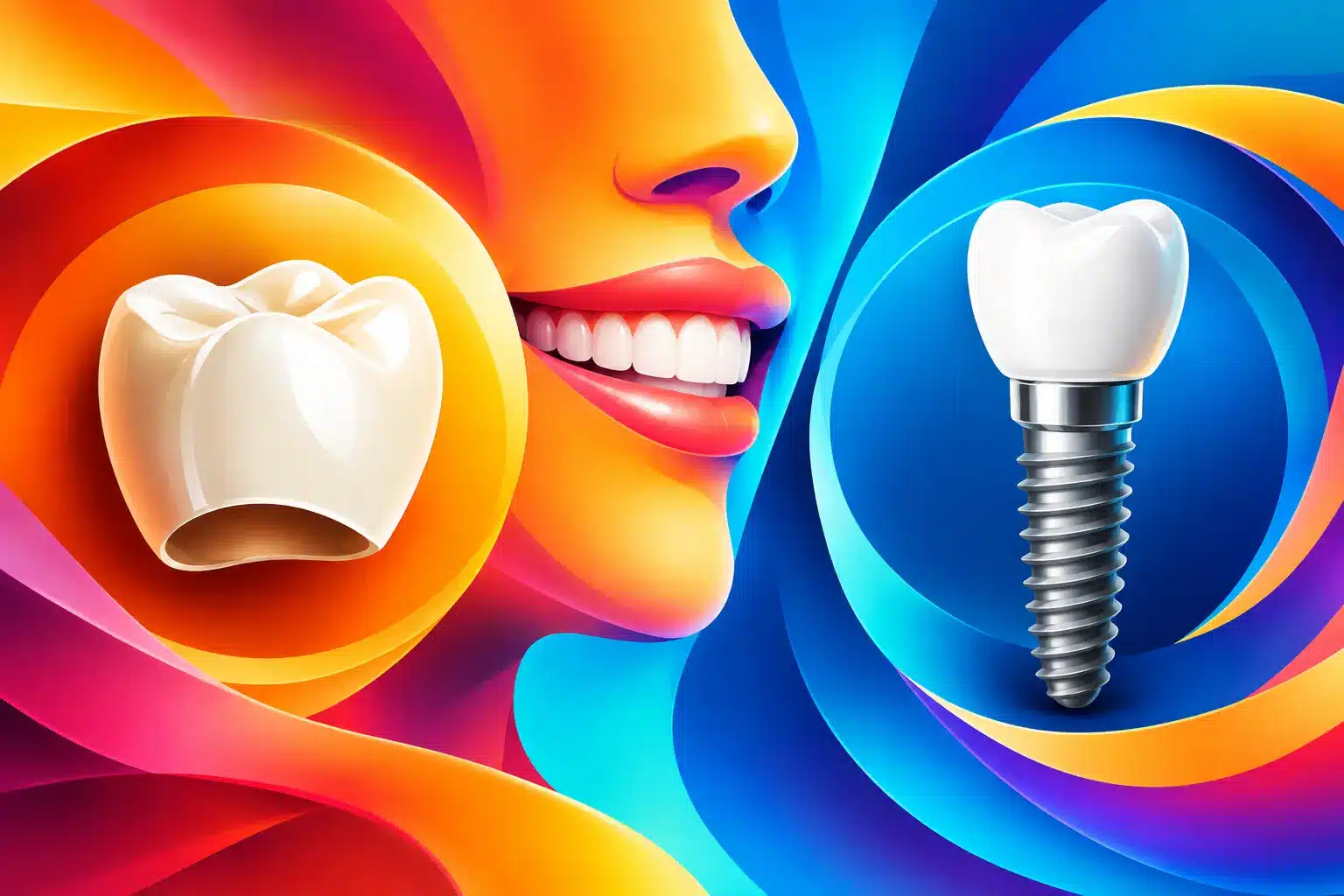
A cracked tooth that still has a healthy root requires a very different solution than a tooth that is already missing. That is the essential distinction in crowns versus implants: one treatment preserves and strengthens an existing tooth, while the other replaces a lost tooth from the root upward. The right choice is never about selecting the most advanced procedure in the abstract. It is about protecting your health, restoring confident function, and creating a result that belongs naturally in your smile.
For patients traveling to Cartagena for high-level aesthetic and restorative care, this decision deserves exceptional planning. A beautiful restoration should look refined, but it must also respect the biology of your mouth, your bite, your timeline, and your long-term goals.
Crowns Versus Implants: The Fundamental Difference
A dental crown is a custom restoration that covers the visible portion of a natural tooth. Think of it as a precisely designed protective shell. It is commonly recommended when a tooth has extensive decay, a large old filling, a fracture, significant wear, or has been treated with a root canal. The natural root remains in place, and the crown restores the tooth’s strength, shape, and appearance.
A dental implant, by contrast, replaces the root of a missing tooth. A small biocompatible titanium implant is placed in the jawbone, where it integrates with the bone over time. Once stable, it supports an abutment and a custom crown. The crown is the visible tooth you see when you smile, while the implant is the foundation beneath it.
This is why patients sometimes compare treatments that do not truly compete. A crown is often the ideal choice when a tooth is restorable. An implant crown is often the superior solution when the tooth cannot be saved or has already been lost.
When a Crown Is the More Conservative Choice
Whenever possible, preserving a healthy natural root is valuable. Your own tooth structure, if stable and free of untreatable infection, can continue to function beautifully with the protection of a well-made crown. This approach is generally less invasive than extraction and implant placement, and the treatment may be completed on a shorter schedule.
A crown may be an excellent option if the tooth has enough sound structure above and below the gumline, the root is not fractured, and periodontal support is strong. Modern ceramic crowns can be designed with remarkable translucency, texture, and shade control. In the smile zone, this artistry matters. A restoration should not merely be white. It should reflect light naturally and harmonize with neighboring teeth, lips, and facial features.
However, placing a crown on a tooth with a poor prognosis can create an expensive delay rather than a lasting solution. If decay extends deeply below the gumline, the root is vertically fractured, or repeated treatments have weakened the tooth beyond predictable repair, a crown may not offer the longevity you deserve.
A Crown Does Not Replace a Missing Tooth
One common misunderstanding is that a conventional crown can stand alone in an empty space. It cannot. A traditional crown needs a natural tooth underneath it for support. When a tooth is missing, the options typically include an implant-supported crown, a fixed dental bridge supported by adjacent teeth, or a removable solution. For patients seeking the most natural independent replacement, an implant-supported crown is frequently the preferred choice.
When an Implant Offers a Better Long-Term Foundation
An implant is designed for a tooth that is missing, severely damaged, or no longer predictable to restore. It offers something a bridge and removable appliance cannot fully provide: a replacement root that transfers chewing forces into the jawbone.
That stimulation matters because bone loss often begins after tooth loss. Over time, the jaw may lose volume in the area where the tooth once stood. For a front tooth, even subtle changes can affect gum contours and smile symmetry. For back teeth, missing support can alter chewing patterns and allow neighboring teeth to drift.
An implant can help preserve the architecture of the jaw and allows replacement of one tooth without preparing the teeth beside it. With proper planning, high-quality materials, excellent oral hygiene, and regular maintenance, implants can deliver exceptional long-term performance.
Still, implants are not an instant answer for every patient. They require sufficient bone, healthy gums, controlled medical conditions, and a commitment to follow-up care. Smoking, untreated gum disease, uncontrolled diabetes, and clenching can affect treatment planning and long-term success. In some cases, bone grafting or gum grafting is recommended before implant placement to create a more stable and aesthetic foundation.
The Aesthetic Question: What Will Look Most Natural?
For visible teeth, aesthetics depend on far more than the color of the crown. The gumline, tooth proportions, lip movement, facial balance, and translucency of the ceramic all influence the final result.
A crown on a natural tooth can deliver an exceptionally lifelike appearance when the underlying root and gum tissue are healthy. An implant crown can also look outstanding, but achieving a natural result in the front of the mouth requires meticulous implant positioning and careful management of the surrounding soft tissue. Implant placement that is even slightly too shallow, deep, forward, or angled can compromise the final contour of the restoration.
This is where specialist-level diagnostic planning distinguishes an adequate result from an elegant one. Digital imaging, bite analysis, facially driven smile design, and high-quality provisional restorations allow the clinician to plan the final tooth before treatment begins. The objective is not simply to fill a space. It is to create a restoration that appears as though it has always belonged there.
Comparing Treatment Time, Cost, and Maintenance
A crown is often faster to complete. After preparation of the tooth, a temporary crown may be worn while the final restoration is crafted. The completed crown can commonly be placed within a relatively short treatment window, depending on the clinical situation and laboratory workflow.
Implant treatment usually takes longer because healing and integration are part of the process. In selected cases, an immediate temporary tooth may be possible on the day of implant placement. Yet the final crown is generally placed after the implant has had time to stabilize. If grafting is required, the timeline may extend further.
Cost should be evaluated as part of total value, not as an isolated number. A crown may have a lower initial investment because it retains the existing root. An implant involves surgery, components, and a final crown, so the initial cost is typically higher. But when a tooth has a hopeless prognosis, repeated root canal treatment, posts, crowns, and repairs can eventually cost more emotionally and financially than a well-planned implant solution.
Both options require excellent maintenance. Crowns can develop decay at their margins if plaque accumulates around them. Implants cannot develop cavities, but they can develop inflammatory conditions around the surrounding gum and bone. Daily brushing, cleaning between teeth, professional hygiene visits, and a protective night guard for patients who grind are essential investments in either treatment.
Why the Diagnosis Matters More Than the Procedure
No ethical clinician should recommend extraction simply because implants are sophisticated, and no clinician should place a crown merely because it is quicker. The question is whether the existing tooth has a favorable long-term prognosis.
At Sonrisa Perfecta Dental, restorative decisions are approached through comprehensive evaluation rather than a one-size-fits-all answer. Clinical examination, digital imaging, gum health assessment, bite evaluation, and aesthetic analysis reveal whether your natural tooth can be predictably preserved or whether an implant provides the stronger foundation.
For international patients, planning also includes the practical reality of travel. A crown may be suitable for a concentrated visit, while implant treatment may require staged appointments or coordinated follow-up. Clear planning protects both the clinical result and the quality of your experience in Cartagena.
The most distinguished choice is not automatically a crown or an implant. It is the treatment that preserves what can be saved, replaces what cannot, and leaves you free to smile, speak, and enjoy every meal with complete confidence.